Common Causes and What to Check
Electric furnaces are fairly simple machines. There’s no flame, pilot light, or gas line, so the list of likely causes is short. But they run on high-voltage power, so most of the real fixes belong to a technician.
This is a common question here. According to the U.S. Energy Information Administration’s 2020 Residential Energy Consumption Survey, about 45% of West Virginia homes use electricity as their main heating fuel, slightly more than the 43% that use natural gas.
How an Electric Furnace Works
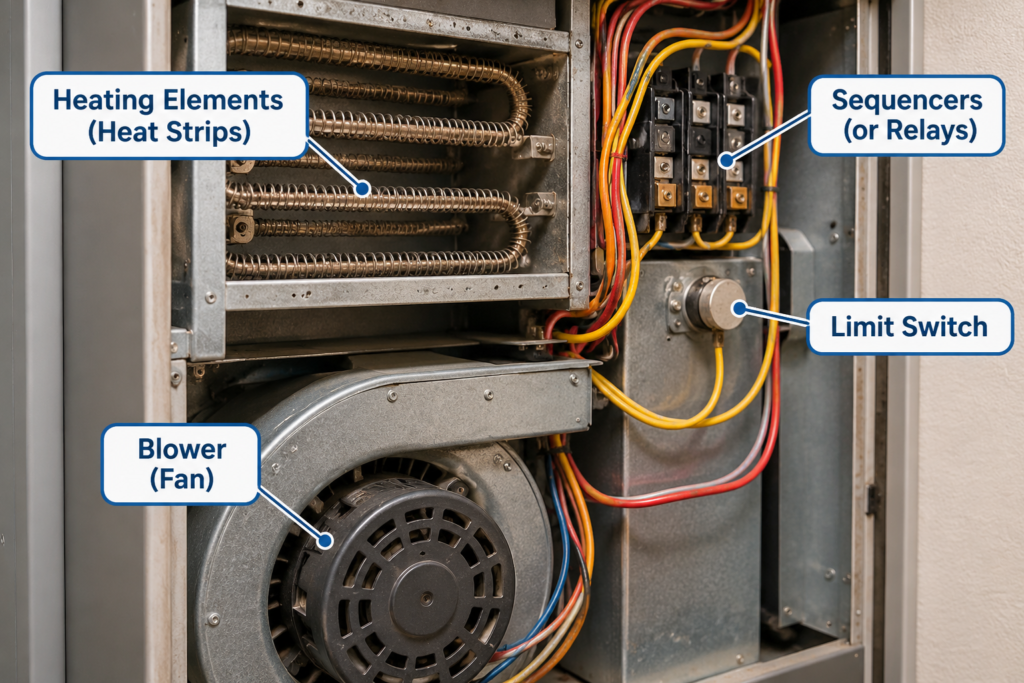
Here are the main parts:
- Heating elements. These are coils of resistance wire, sometimes called heat strips. Most furnaces have two or more, and they get hot when electricity passes through them.
- Sequencers or relays. These switches turn the elements on one at a time, so the furnace doesn’t pull its full electrical load all at once. When the call for heat ends, they turn the elements off in stages.
- Blower. A fan pulls air from your return vents, pushes it across the hot elements, and sends it through the ductwork.
- Limit switch. This safety device shuts the elements off if the furnace gets too hot, which usually happens when there isn’t enough airflow.
- Dedicated circuit. Electric furnaces usually run on a 240-volt circuit with large breakers. Many also have a disconnect switch or box near the unit.
Because the elements turn on in stages, an electric furnace can fail partway, giving weak or lukewarm heat.
Safety First: What Homeowners Should and Shouldn’t Do
An electric furnace carries enough voltage to cause serious injury, even when the blower is off. Here’s where to draw the line:
- Okay to do: check the thermostat, replace the air filter, and reset a tripped breaker one time.
- Not okay: opening the furnace cabinet or access panels, removing covers on the disconnect box, replacing fuses, or touching any wiring, elements, or controls.
If a breaker trips again, or you smell burning or see scorch marks, stop. Electrical faults are a job for a technician only.
Common Reasons an Electric Furnace Isn’t Heating
1. Thermostat Settings
Start with the simplest cause. Make sure the thermostat is set to Heat, that the temperature setting is a few degrees above the room temperature, and that the fan is on Auto. If the fan is set to On, it runs all the time, including between heating cycles, and the air will feel cool much of the time. If your thermostat uses batteries and the screen is blank or dim, replace them.
2. A Tripped Breaker or a Switched-Off Disconnect
Electric furnaces draw a lot of power, so breaker trips are common. Look in your main electrical panel for the breakers labeled for the furnace or air handler. They’re often double breakers, sometimes more than one set. If a breaker is in the middle or “off” position, switch it fully off and then back on, once.
Also make sure the disconnect switch near the furnace is on. Don’t open the disconnect box.
If the breaker trips again, leave it off and call a professional. A repeat trip means something is drawing too much current, such as a shorted element, a failing motor or a wiring fault.
3. A Dirty Filter or Blocked Airflow
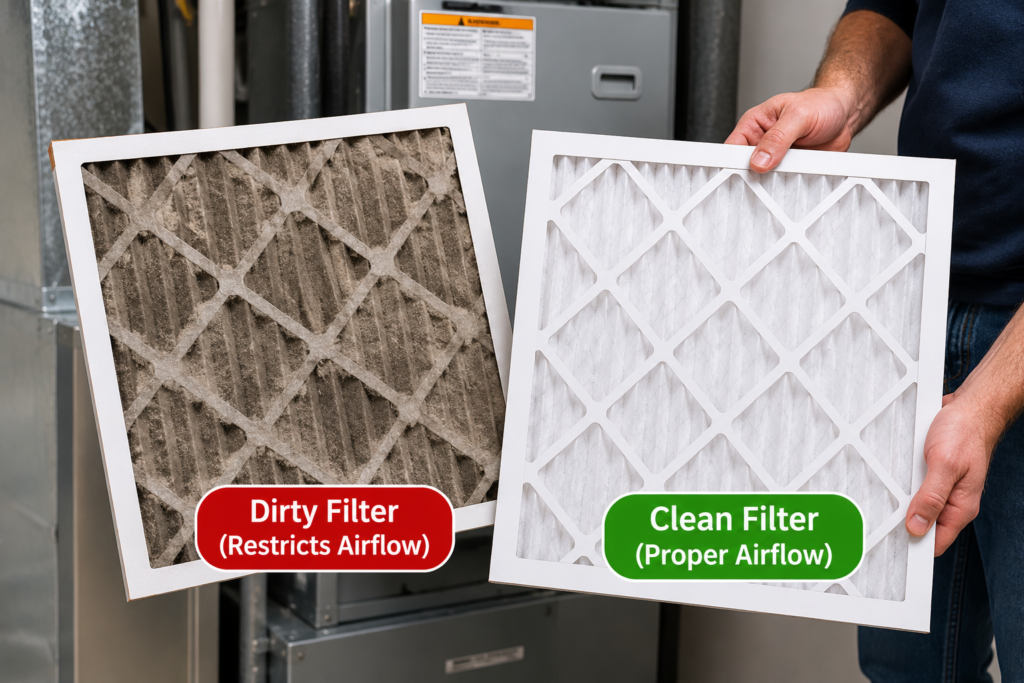
A clogged filter is one of the most common causes of electric furnace problems. When air can’t move freely across the elements, they overheat, the limit switch trips, and the elements shut off. The blower may keep running and push out cool air.
Check the filter and replace it if it looks gray or dusty, using the size printed on the frame. Then make sure supply registers and return grilles are open and not blocked by furniture, rugs or curtains. If the furnace keeps overheating with a clean filter, it needs a professional look.
4. Blown Fuses
Many electric furnaces have fuses inside the cabinet or in the disconnect box, in addition to the breakers in your main panel. A blown fuse can knock out one element or the whole unit, even when every breaker looks fine.
Fuses sit on live, high-voltage parts, and a fuse usually blows for a reason. This is not a homeowner check. A technician can find out why the fuse blew and fix that problem before replacing it.
5. A Failed Heating Element
Heating elements wear out over time, and one can break much like an old light bulb filament. If one of several elements fails, the furnace still runs but puts out less heat. You might notice the house falls behind on the coldest days, or the air from the vents feels only lukewarm. If every element fails, the blower may run with no heat at all.
6. Sequencer or Relay Problems
If a sequencer or relay fails, the element it controls never turns on, even if the element itself is fine. The symptoms look a lot like a failed element: weak heat, lukewarm air, or no heat. A sequencer that sticks closed can also keep elements on longer than it should, which can lead to overheating and limit trips.
Telling the two apart takes electrical testing with the panels open.
7. Limit Switch, Blower or Control Problems
A limit switch can wear out and trip early, or the problem can be the blower. A weak or failed blower motor can’t move enough air, so the elements overheat. A bad control board, transformer, or loose wire can also stop the heating sequence. All of these need professional diagnosis.
If your furnace runs but the air feels cold, and you want to compare electric causes with gas furnace causes like ignitors and flame sensors, see our guide on why a furnace blows cold air.
When to Call a Professional
Call for service if:
- A breaker trips again after one reset
- You smell burning or hot plastic, or see scorch marks or smoke (turn the system off at the thermostat, and call 911 if you see smoke or flames)
- The blower runs, but the air stays cool or lukewarm
- The furnace turns on and off in short bursts, even with a clean filter
- The house can’t keep up on cold days
UKV HVAC handles furnace repair and can test the breakers, fuses, elements, sequencers, and safety controls to find what’s actually wrong. We explain the problem and your options with clear pricing before work begins.
If your electric furnace is older and repairs are adding up, ask about replacement options, including a heat pump. Financing is available, and you can ask about extended warranties on new equipment.
Frequently Asked Questions
Why is my electric furnace blowing cold air?
The most common reasons are a fan set to On, a tripped breaker, a clogged filter that’s tripping the limit switch, or a failed element or sequencer. Check the thermostat, filter, and breaker first. If those look fine, call a technician.
How many times can I reset my furnace breaker?
Once. If it trips again, leave it off and call a professional. A repeat trip points to an electrical problem.
Can I replace a heating element or fuse myself?
No. Those parts are inside the cabinet on high-voltage circuits. Opening panels or handling wiring is a technician-only job.
Do electric furnaces need maintenance?
Yes. Change the filter regularly, and schedule a professional furnace tune-up to check the electrical connections, elements, sequencers, and blower before winter.
Electric Furnace Still Not Heating? Call UKV HVAC
If you’ve worked through the safe checks and still don’t have heat, UKV HVAC is ready to help. We provide furnace repair for West Virginia homes, including furnace repair in Charleston and Beckley, plus South Charleston, Morgantown, Huntington, Hurricane, and Teays Valley. You can call us at 304-419-6789 or contact UKV HVAC to schedule service.